Longitudinal cutting, lane by lane
The shaft that carries the circular knives and cuts the web along the direction of travel. Each knife sits on its own ring and is locked where the job needs it, so a wide reel comes off the machine already split into the lanes you need, with no second pass.
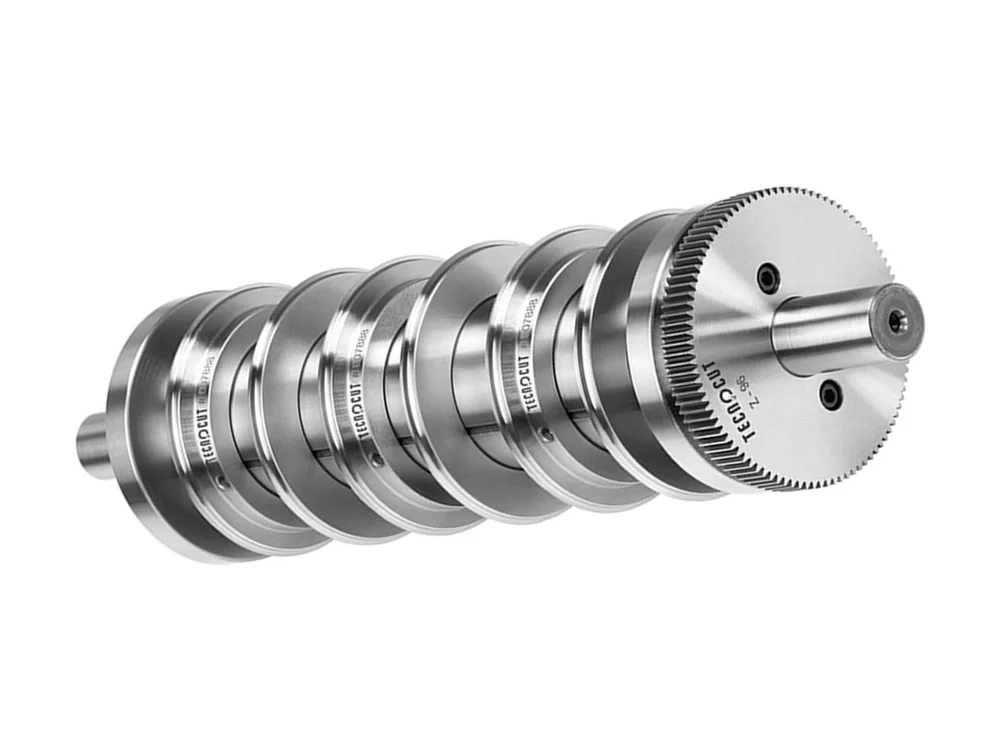
The shaft is machined and ground in our own workshop. That is what keeps the knives running true from one end of the width to the other.
The knives are mounted on independent rings and locked at the position the format calls for. Changing job means moving the knife, not changing the tool.
The gear is made with the pitch and tooth count of your machine, so the shaft drops into the space you already have and runs in time with the rest of the train.
A knife that has lost its edge does not mean a new shaft. It comes into the workshop, is reground or replaced, and goes back into production with the geometry it left with.
The edge is restored to the original profile, so the cut comes out the way it did on day one.
When a knife is past regrinding, only that part is changed and the rest of the shaft keeps working.
The seats and the centring are checked, which is what keeps every knife at the same height.
The job sets the positions, not the tool: the same shaft covers different lane widths.
Moving a knife takes minutes, and the machine is back in production without waiting for new tooling.
Hardened body and knives that can be reground: the assembly stays in service for years.
Tell us the web width, the cutting positions and the machine it goes on, and we will confirm the shaft and the knives.