Tecnocut Tecnocut
Tooling  /  Magnetic cylinder

Magnetic cylinder

Holds the die with the most precise concentricity

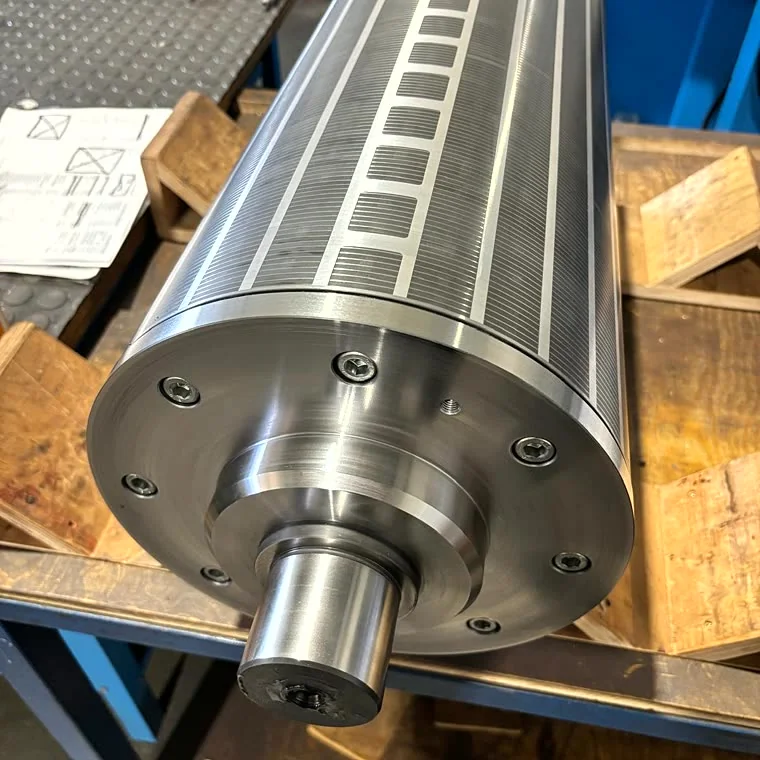
A stainless steel body that does not corrode, hardened bearers and strong, even adhesion of the flexible die throughout the job.
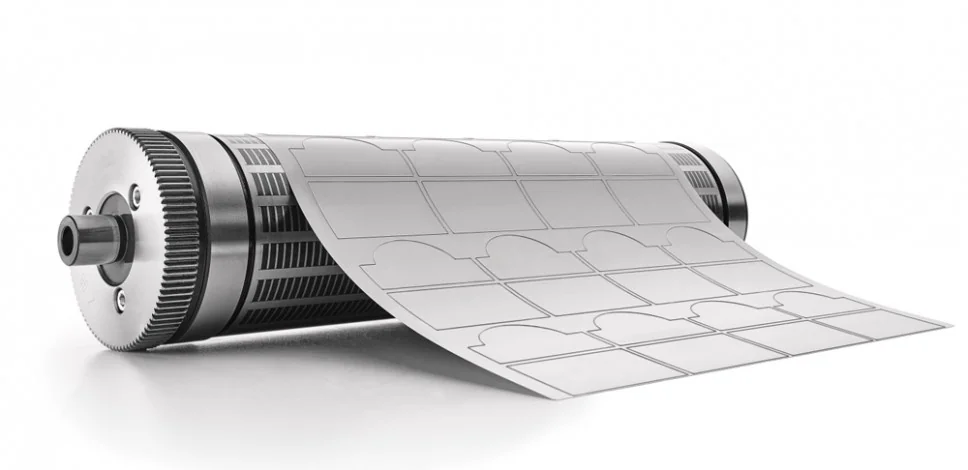
Tecnocut magnetic cylinder with the flexible die mounted
60 HRC Bearer hardness
Stainless Or hollow aluminium, to save weight
Neodymium Reinforced magnets on request
How it’s made

Precision starts here

If the cylinder isn’t concentric, no die can fix it. That is why we take care over the tolerances, the hardening of the bearers and the magnetic force.

01

Hardened bearers

Hardened to 60 HRC so they withstand continuous work without losing dimension.

02

Choice of body

Corrosion-resistant stainless steel, or aluminium and hollow construction when weight needs to be saved.

03

No shifting

Positioning pins can be fitted so the plate doesn’t move, and more powerful neodymium magnets for special jobs.
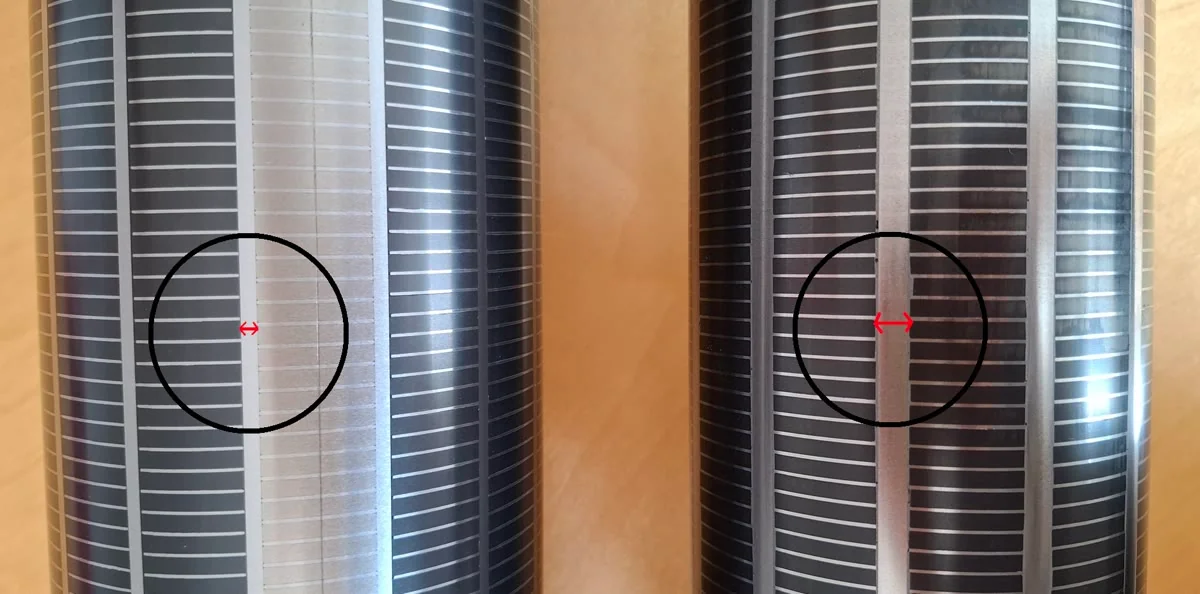
The two constructions at the same magnification: narrow steel band on the left, wide on the right
Where the difference lies

The narrower the steel band, the stronger the grip

Between one magnet and the next there is a steel band that doesn’t hold. Narrowing it leaves more magnetic surface on the same cylinder, and you can tell by how firmly the plate is held.

  • More magnetic surface. The die is held more firmly and in the same position from the start to the end of the run.
  • Less risk of corrosion. The narrow band reduces exposure, and the cylinder stays in good condition even with standard steel.
  • Neodymium on request. One row of magnets can be reinforced with neodymium to increase the holding force.

Both surfaces in the photo are at the same magnification.
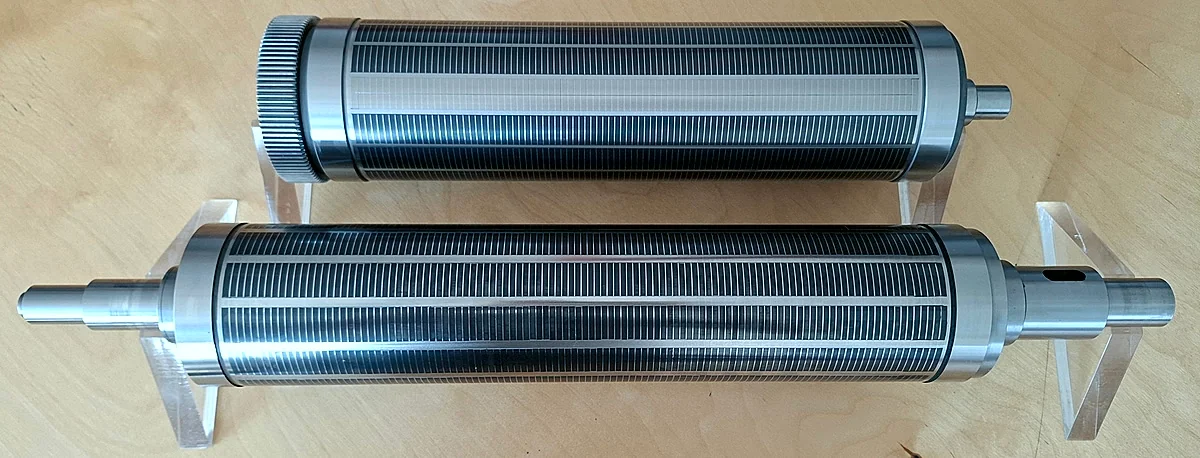
The two types of magnetic cylinder, side by side
The two magnetic cylinder constructions, side by side.
Two constructions

Which of the two suits you

Maximum magnetic surface

  • Narrower steel bands between magnets
  • More magnetic surface and a firmer hold
  • Lower risk of corrosion by design
  • For long runs and demanding jobs

Standard construction

  • Differently shaped magnets and wider steel bands
  • Stainless steel body to prevent corrosion
  • Standard DIN 8/9 gear, milled and black-oxided
  • Better price, for small and less demanding jobs

Both hold the die; what changes is the available magnetic surface and the price.
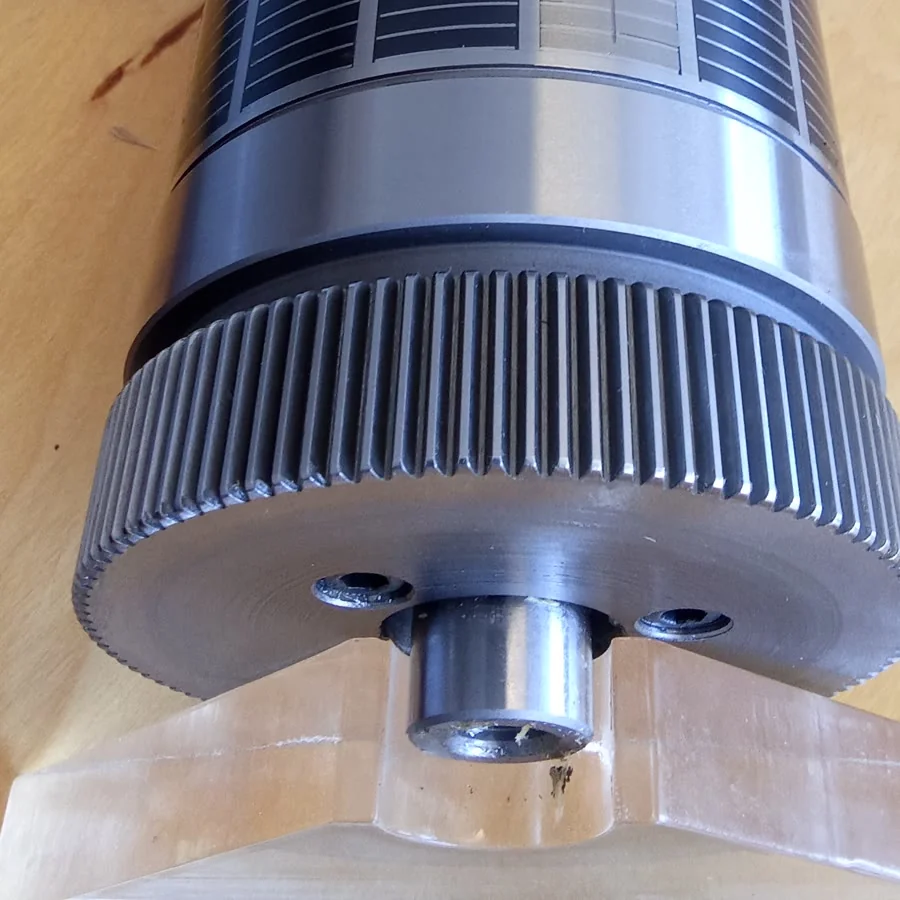
Helical gear ring at the end of a magnetic cylinder
How it’s calculated

The repeat, in one line

The cylinder repeat is the number of teeth multiplied by the module.

Repeat (mm) = z × m

Label work uses 1/8 inch teeth, that is 3.175 mm. So all you need to do is count the teeth.
  • TeethInchesMillimetres
  • Z 96 12″ 304.8 mm
  • Z 112 14″ 355.6 mm
  • Z 136 17″ 431.8 mm
  • Z 160 20″ 508.0 mm
  • Z 192 24″ 609.6 mm
Magnetic cylinder machined in the workshop
Service

We also repair the one you already have

Maintenance and redesign of cylinders in service to recover their performance, instead of replacing them. And adaptation to special jobs and small diameters.

It is possible because the cylinder is modular, not a single piece: the bearers and the shaft are not permanently integrated, so they can be inspected, ground and replaced over the life of the cylinder.

Keep exploring

What the magnetic cylinder works with

Which repeat do you need?

Tell us the number of teeth or the repeat of your job, and the press it will be mounted on. We will confirm dimensions, body material and lead time. Every cylinder is manufactured to an approved drawing.